5. Lead with empathySome Good News.
Tempting as it may be, the media can’t ignore what a president says. It’s unprofessional to abet the public’s ignorance. It’s also dangerous to democracy. An ill-informed populace is easily manipulated and, in regions without a local news source — in 2024, there were 206 “news deserts” in the United States, encompassing almost 55 million Americans — it’s hard to maintain a sense of community or organize to challenge bad governance. Still, amid all the chaos and cruelty of the Trump administration, the media are not defenseless. His endless efforts to undermine them attest to their continuing power and importance. Being of a practical turn of mind, I’ve culled some ideas for how to use that power from several sources and added a few of my own to come up with seven-and-a-half propositions for good journalism in the Age of Donald J. Trump.
- Get the story right.
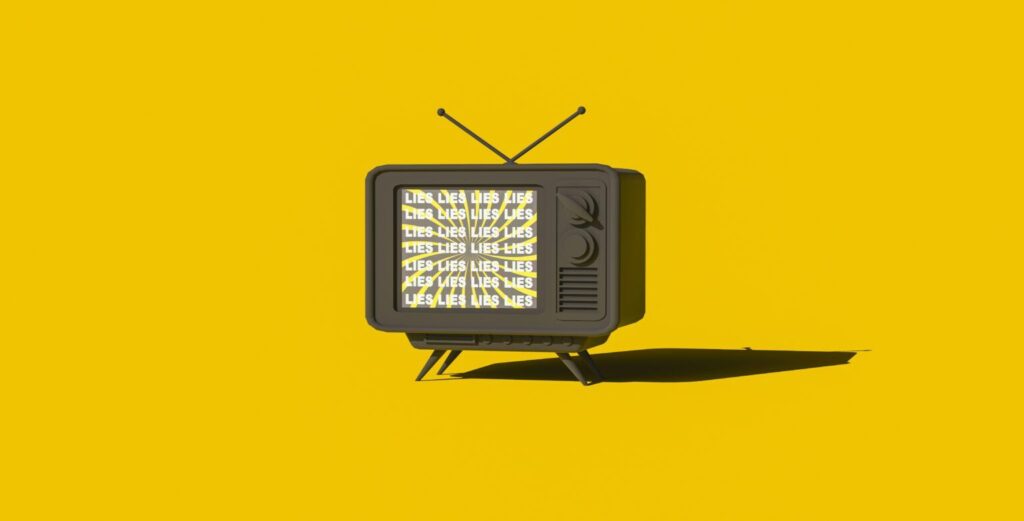
If you think about it, the only thing journalists have going for them is that people believe them. Without that, their usefulness ceases to exist. So, it’s important (particularly in the Age of Trump) that they call out lies and flimflam in clear, accurate, precise, straightforward language, including in headlines. For example, Trump’s desire to turn Gaza into a golf course is ethnic cleansing, not a “plan to rebuild” Gaza, and tariffs are “import taxes,” not an incentive to reindustrialize America. It’s necessary also to keep repeating the truth in the face of lies: immigrants, for instance, are considerably less likely to be imprisoned for crimes than U.S.-born people (though you certainly wouldn’t know that from listening to Trump and crew), and pulling funding from universities is as much about curbing antisemitism as Covid was about clearing our sinuses.
2. Supply significance, context, proportion, and consequences.
Key tasks for reporters and analysts are to separate the substantial from the silly, the consequential from the sensational, and random musings from faits accomplis, then to report the hell out of the real issues, keep them prominent within the churn of news cycles, and explain why they matter. A place to begin is by giving less attention to Trump’s executive orders — aptly defined by a law professor as “just press releases with nicer stationery” — and more attention to the effects of his policies that get enacted. And while his ruminations may bear noting, they could appear, not in headlines, but on, say, page 11 (or its online equivalent), which is where the Boston Globe relegated its report of the local 100,000-strong Hands Off! protest.
3. Heed framing.
News stories are a snapshot of a specific, often fleeting moment during which reporters decide what to include, what to leave out, and what to emphasize. The problem arises when conventional thinking and herd instinct solidify those choices as the only choices. There may be just two dominant American political parties, for instance, but there are other political forces at work in the country and we’d all benefit if they weren’t covered primarily as nuisances or threats. And while gyrations of the stock market matter, they matter less to most people than gyrations in their rents or mortgages, grocery bills, or prospects for retirement.
4. Resist euphemisms, circumlocutions, and normalizing the abnormal.
The term “sanewashing” — reporting Trump’s loony pronouncements as if they were lucid thoughts or comments — hasn’t been popping up much since the 2024 presidential campaign ended. It’s been replaced by the tendency of mainstream journalism to reinforce the status quo, as when the CEO of CNN instructed his staff to omit mention of Trump’s felonies and his two impeachments in their inauguration coverage. Or maybe it’s been folded into the journalistic task of trying to make sense of events — what The Atlantic‘s editor Jeffrey Goldberg called a “bias toward coherence” — which presented the schoolyard taunts about tariffs slung between Trump advisors Elon Musk and Peter Navarro as if they were serious policy discussions.
5. Lead with empathy.
They’re called news stories for a reason. As cheap as tug-the-heartstrings journalism can be, readers, listeners, and viewers pay attention to stories about people, especially when they’re like them. So, while USAID staff getting locked out of their offices by Elon Musk’s DOGE may not resonate with many Americans, parents whose kids are locked out of daycare because its funding was cut by Musk, a billionaire father of perhaps more children than he can keep track of, probably will.
6. Control the message.
Here’s the central messaging thing about Trump: he’s remarkably skilled at lassoing any discussion, any topic he brings up, and holding onto it. That means the media, whose relationship with politicians should be inherently adversarial, all too often starts out on the defensive if it tries to hold him accountable for his words and deeds. Of course, he never apologizes, never takes responsibility for anything, never rules anything out, and never admits to error or failure. Instead, when he says something outlandish and gets called on it, he doubles down and dispatches his minions to repeat and embellish it. The media then amplify and discuss it, as if it were actual governance, rather than gibberish, whim, or theatrics. Which means that we get stories about what Trump said and then stories about the stories about what he said, and on and on until he comes up with a new distraction.
7. Be creative, adventuresome, and strategic, and always, always stick up for each other.
This is hardly the first time the press has faced government hostility, and the American news media have struggled for years to overcome skepticism and win over tough audiences. Trade publications, podcasts, newsletters, and other independent and niche outlets fill some gaps and help engage not-so-obvious audiences, but standing up to power can be a very lonely task. In a time when even Republican Senator Lisa Murkowski admits to being scared, self-censorship can seem like an all too appealing choice. So it’s essential for other journalists to unite to resist unfair restrictions on any journalist, as even Newsmax and Fox News did against Trump’s treatment of AP. Journalists can also highlight the courage of their colleagues to let them know they’re not alone.
Of course, just about all of the above costs money, so my final nudge is not to journalists but to those of us who value good journalism. Support your local and national outlets however you can and, as stakeholders, urge them to do better. For all the deserved criticism of the American media, they remain one of the strongest pillars propping up what’s left of democracy in a time that’s been anything but good for the First Amendment. We can’t afford to let them topple.