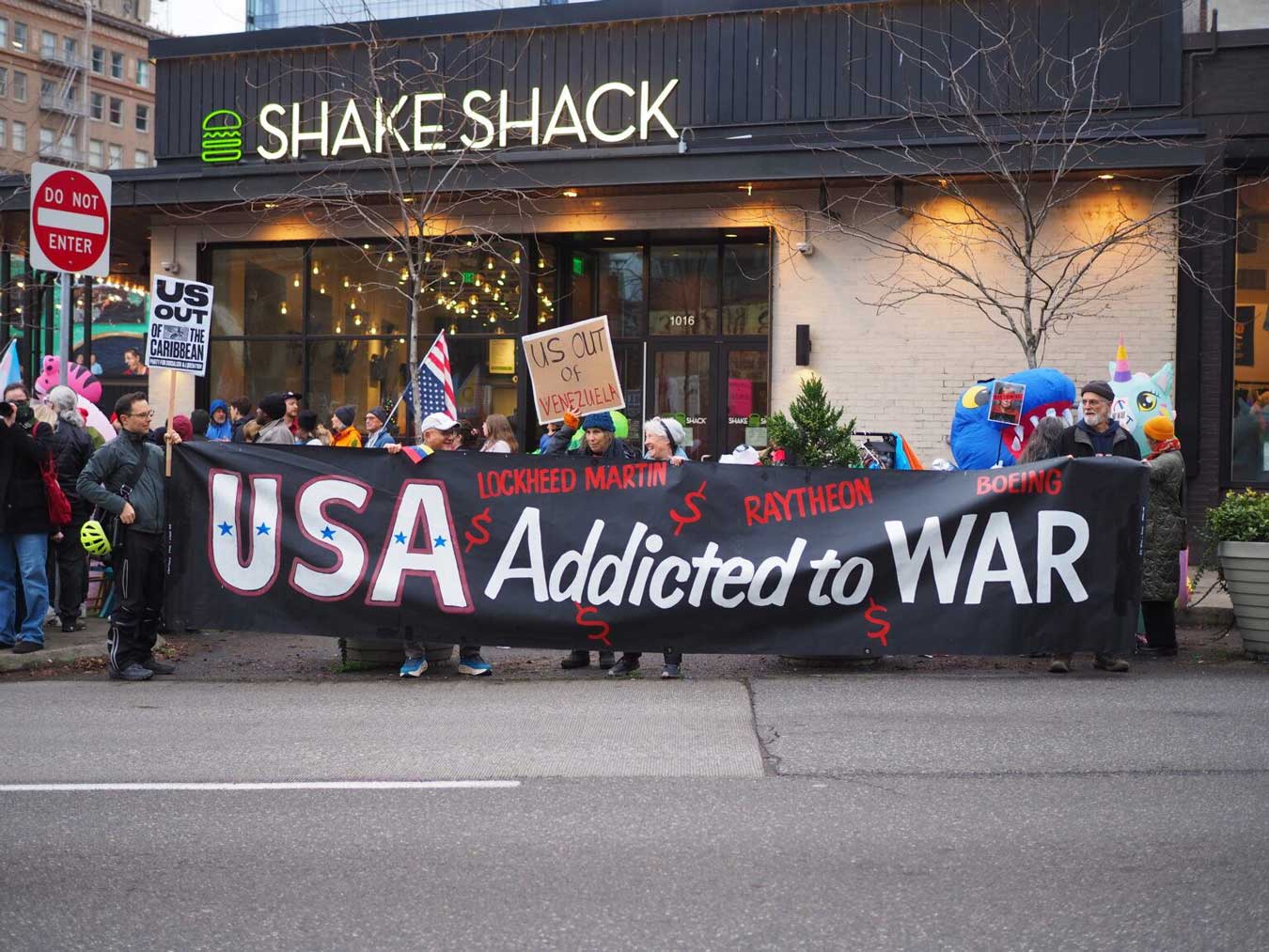
First, energy discipline. Venezuela’s oil reserves the largest in the world are described as “mismanaged,” belonging to the US because it was an early investor. Intervention is implied as corrective rather than coercive. Sovereignty gives way to “global energy stability.” (“Trump Says US Is Taking Control of Venezuela’s Oil Reserves. Here’s What It Means.” CNN Business, January 4, 2026.LINK.)
Second, regional stability. Commentators warn of refugee flows, cartel violence, and spillover risk. The United States is framed as a reluctant stabilizerand even a force for good. (Muñoz-Pogossian, Betilde, and Alexandra Winkler. “The Persistence of the Venezuelan Migrant and Refugee Crisis.” Center for Strategic and International Studies, November 20, 2025.)
Third, geopolitical objectives and hegemony masquerading as law enforcement. Comparisons are drawn to counter-narcotics operations. The language of policing replaces the language of invasion. (“The War on Narco-Terrorism in Latin America.” Steptoe. Accessed January 7, 2026.
Finally, the moral escape hatch: “messy, but necessary.” Legal discomfort acknowledged, then dismissed. Illegality is rendered tolerable when performed by the hegemon and endorsed by Western Allies. (de Wet, Alex. “Can Military Intervention Be ‘Humanitarian’?” Middle East Research and Information Project, May 14, 2017.
And now, Western foreign policy analysts and media are turning a blatant breach of international law by the US into an opportunity to demonise others. They are warning that Trump has set a precedent Beijing could use against Taiwan or Putin against others. (“U.S. Strike on Venezuela Puts China’s Taiwan Saber-Rattling in Focus,” CNBC, January 5, 2026, https://www.cnbc.com/2026/01/05/us-venezuela-strike-taiwan-china-precedent-russia-ukraine.html.)
This is moral evasion dressed as strategic analysis with the goal of diverting attention from the grave crime committed.
It converts American criminality into hypothetical Chinese villainy within hours—erasing what was done by raising panic about what might be done by their enemies. China has not refrained from attacking Taiwan because it was waiting for the United States to set a precedent. (Ryan Hass, “Trump’s Strikes on Venezuela Will Not Embolden China to Invade Taiwan,” Council on Foreign Relations, January 4, 2026, .)
The speed of this deflection is the entire tell : accountability vanishes, anxiety replaces it, and American lawlessness becomes a warning about someone else’s future behaviour.
These narratives launder power. By converting a breach of law into strategic inevitability, agency disappears. Responsibility dissolves. Violence becomes abstract. This is not analysis. It is anesthesia with amnesia.