Inflation or Deflation?
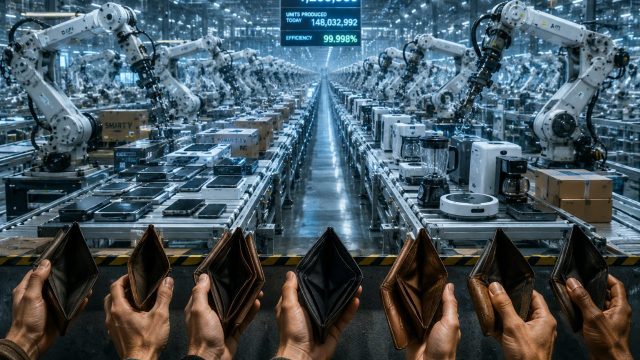
The chief objection to the colonies’ paper “scrip” was that they tended to over-print, so that “demand” (money) outstripped supply. Too much money chasing too few goods produced price inflation. But in the 21st century, we will soon have the opposite problem: too little money chasing too many goods. Machines don’t need food, clothing, shelter, transportation, medical treatment or other services. So who will buy those goods and services?
Money needs to be issued to human consumers, and not just to a few wealthy human consumers serving as debt brokers thriving on interest. To create sufficient demand for the voluminous output of AI/robotics, it needs to go to the whole national population, evenly distributed. Not only can UHI work in that sort of abundant supply without producing price inflation; it is actually essential to prevent deflation.
In a conversation on X, Musk wrote:
“In a normal economy, issuing more money simply increases the dollar price of the existing output of goods & services, meaning people do NOT get more stuff. If AI/robotics massively increase goods & services output, then you actually MUST issue dollars to people or there will be massive disinflation. “
As paraphrased on Yahoo Finance (reposted from Benzinga), Musk wrote that handing out more dollars becomes a problem only when the economy’s supply of goods and services fails to surge alongside the money supply. His claim is that AI and robotics could lift production so sharply that the bigger risk would be falling prices, not rising ones.
But aren’t falling prices a good thing? In this case, no. Prices would be falling due to a lack of demand, meaning producers can’t find customers for their products. They wind up laying off workers and eventually going bankrupt. When spread across the whole economy, the result is a deflationary spiral: prices fall, businesses lose revenue, and the economy contracts, not because production is inadequate but because purchasing power is insufficient. The result is recession or depression. In the Great Depression of the 1930s, food was rotting in the fields while people were starving, because they were out of work and had no money to spend.
Job cuts from AI are already happening. According to the same Benzinga article:
“Evidence of near-term strain is showing up in corporate announcements: employers disclosed more than 27,000 job cuts linked to AI in the first quarter of 2026, according to Challenger, Gray & Christmas. The outplacement firm said that figure was up 40% from the same period a year earlier. “
Robert Reich reports that wages are around two-thirds of the typical corporation’s total cost, and that in the first four months of 2026, big U.S. corporations cut over 128,000 jobs.