Palast and the End Game Memo: Making the World Safe for Derivatives
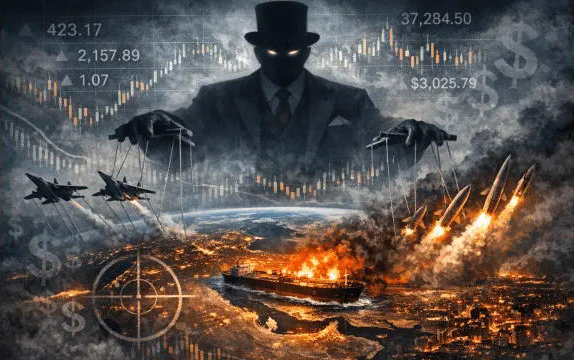
Guaranteeing against shipping loss is one type of insurance, but a much bigger insurance trap is the derivatives market. Sold as a form of insurance against market risk, derivatives are a speculative betting game that extracts rents from all major economic flows.
In his 2013 article, Greg Palast presented evidence of a secret 1997 memo to Deputy Treasury Secretary Larry Summers from Timothy Geithner (then U.S. Ambassador to the WTO acting for Summers) describing the “End-Game” of the WTO Financial Services negotiations. Geithner wrote to Summers, “As we enter the end-game… I believe it would be a good idea for you to touch base with the CEOs ….” The memo then listed the private phone numbers of Goldman Sachs, Merrill Lynch, Bank of America, Citibank, and Chase Manhattan, numbers which Palast confirmed were real.
What was the end-game? Palast wrote:
“US Treasury Secretary Robert Rubin was pushing hard to de-regulate banks. That required, first, repeal of the Glass-Steagall Act to dismantle the barrier between commercial banks and investment banks. It was like replacing bank vaults with roulette wheels.
Second, the banks wanted the right to play a new high-risk game: “derivatives trading.” … Deputy Treasury Secretary Summers (soon to replace Rubin as Secretary) body-blocked any attempt to control derivatives.
But what was the use of turning U.S. banks into derivatives casinos if money would flee to nations with safer banking laws?
The answer conceived by the Big Bank Five: eliminate controls on banks in every nation on the planet – in one single move.… The bankers’ and Summers’ game was to use the Financial Services Agreement, an abstruse and benign addendum to the international trade agreements policed by the World Trade Organization.
The new rules of the game would force every nation to open their markets to Citibank, JP Morgan and their derivatives “products.”
And all 156 nations in the WTO would have to smash down their own Glass-Steagall divisions between commercial savings banks and the investment banks that gamble with derivatives.”
The WTO Financial Services Agreement became the battering ram for opening global markets to this derivative play. Every member nation was forced to open its banking system or face sanctions. In 1999, the portion of Glass-Steagall separating investment banking from depository banking in the U.S. was repealed, leaving depositors’ money vulnerable to speculative risk. Derivatives then exploded. Sovereign bonds, oil contracts, shipping insurance policies, and war-risk premiums were all sliced into credit-default swaps, hedges, and other derivative products.
Derivatives trading has since become one of the most concentrated and profitable businesses on the planet, and it is almost entirely controlled by a handful of megabanks. According to data from the Bank for International Settlements and the Office of the Comptroller of the Currency, the top five U.S. banks alone hold roughly 90% of all U.S. bank derivatives, with JPMorgan, Citigroup, Goldman Sachs, Bank of America, and Morgan Stanley dominating the global over-the-counter market. These institutions capture the lion’s share of derivative profits, especially during periods of volatility when the “chaos premium” spikes.