HENRY GIROUX
MARCH 20, 2026
“Violence is the last refuge of the incompetent.”
– Isaac Asimov
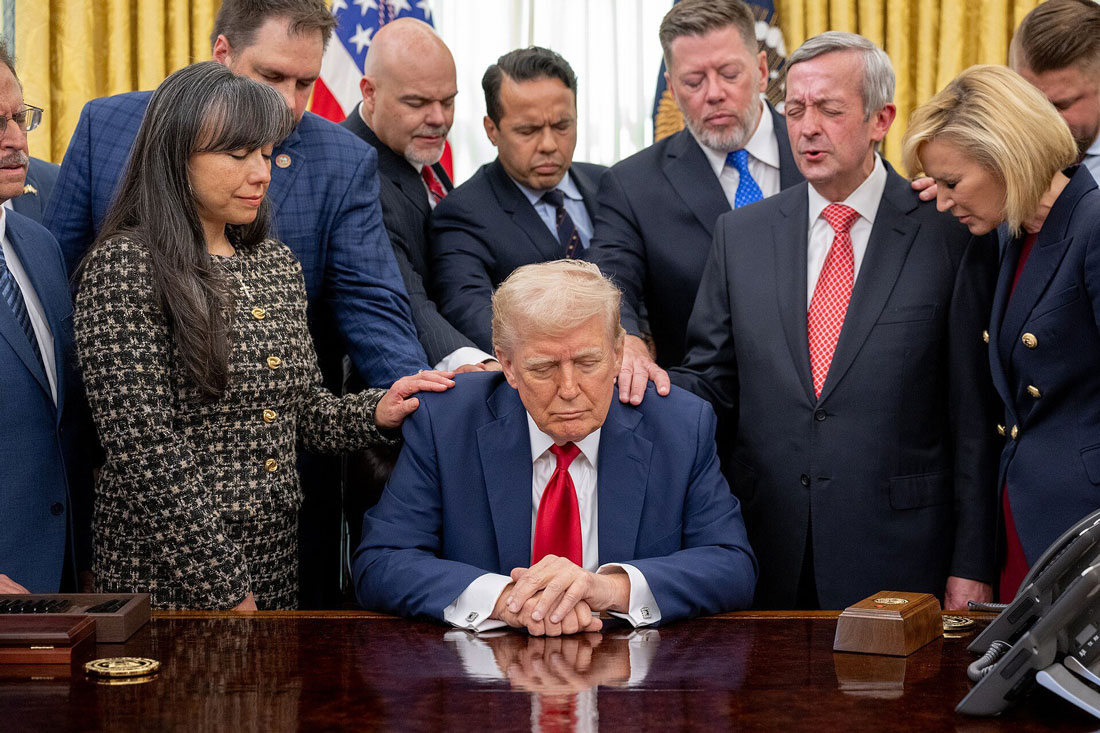
Israel and the United States are now at war with Iran, a conflict framed by both leaders through a stark and self-serving moral binary. In the words of Benjamin Netanyahu, it is cast as a “necessary fight between good and evil.” For Donald Trump, the illegality of the war is beside the point. It is waged instead in the ideological spirit and cruelty of the Crusades, fueled by religious fervor and animated by what David Smith writing in The Guardian, has called a celebration of the “capacity to inflict violence.” What this religious framing obscures is the political reality that this is, in large part, Netanyahu’s war, one he has long prepared by casting Iran in apocalyptic terms as a successor to Nazism. But as Fintan O’Toole suggests, something even more disturbing is at work: in Trump’s hands, the war is severed from any coherent political or moral rationale, reduced to a hollow spectacle of destruction, a language of power emptied of meaning itself. Yet this emptiness is not benign. It signals at once a profound political weakness and an unrestrained embrace of state violence, a politics of dispossession and a logic of disposability that, if left unchecked, points toward the reemergence of camps as instruments of governance, cloaked in the moral certainties of religious dogmatism.
This fusion of war, spectacle, and religious zeal is not merely a rhetorical flourish. It signals a deeper transformation in how violence is imagined and justified. Trump’s Secretary of Defense, Pete Hegseth, gives this worldview its most chilling expression. Speaking with a zeal that echoes the language of holy war, he declares that the mission of the U.S. military is “to unleash death and destruction from the sky all day long.” In such statements, war is stripped of the language of restraint, law, or even tragic necessity. It becomes an open affirmation of annihilation as virtue.
As Greg Jaffe observes in The New York Times, rhetoric of this kind signals a profound shift in the moral framework guiding American power. Instead of invoking justice or defense, it embraces vengeance. In this worldview, the enemy is not an opponent to be contained or negotiated with but a foe to be obliterated. War thus becomes not only an instrument of policy but a spectacle of righteous fury, a theater of domination in which violence is sanctified and the infliction of blood, suffering, and death is embraced as proof of strength. Yet the significance of this war culture extends far beyond the battlefield. Its logic does not remain confined to foreign policy; it migrates inward, reshaping the language, institutions, and pedagogical practices of domestic life.
War has long been the most brutal expression of state power, but in the political culture surrounding Donald Trump it has taken on an even darker significance. War is no longer simply a strategic instrument of foreign policy. What is emerging instead is a war culture in which violence, white Christian nationalism, and militarized spectacle function as a form of public pedagogy, instructing citizens not to question domination but to admire it.