HENRY GIROUX
AUGUST 7, 2026
“Not everything that is faced can be changed, but nothing can be changed until it is faced.”
– James Baldwin
“You cannot understand the twentieth century without Hiroshima.”
– Robert J. Lifton and Greg Mitchell
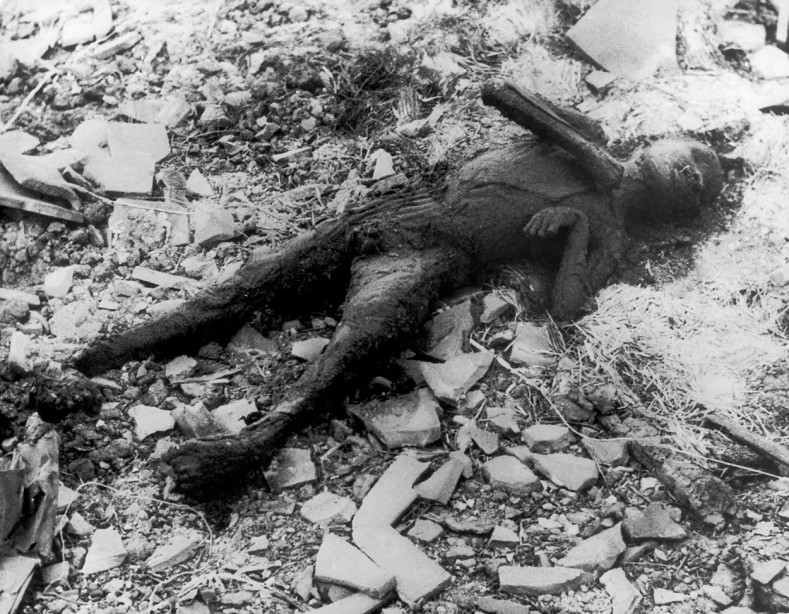
Every day we scroll past photographs of burned children, bombed-out neighborhoods, families clawing through rubble with their bare hands, and parents carrying the bodies of sons and daughters killed beneath collapsing concrete. Such images seldom unsettle our conscience, provoke outrage, and awaken a demand for justice. Increasingly, they do none of these things. They register briefly before dissolving into another statistic, another headline, another passing image in the endless digital stream. Violence has become familiar, suffering routine, and genocide itself is in danger of becoming just another image consumed and forgotten..
This is not merely a political development; it is one of the great moral and cultural disasters of our age. We have not simply become accustomed to living amid unprecedented violence, we have been educated to accommodate it. Cruelty no longer confronts us as an ethical rupture demanding judgment and action. It has been absorbed into the rhythms of everyday life, stripped of its capacity to shock, and transformed into yet another spectacle competing for our distracted attention.
Under such conditions, the dehumanization of others is inseparable from the transformation of the machinery of death into a spectacle consumed with fascination rather than horror. The deepest victory of authoritarian politics in the twenty-first century lies not only in its capacity to produce immense suffering, pain, and death, but in its ability to cultivate moral indifference while making violence appear seductive, entertaining, or inevitable. When people cease to feel the pain of others, violence no longer requires widespread consent; it needs only widespread indifference.
As the anniversaries of Hiroshima and Nagasaki return once again, they do so largely eclipsed by the Trump administration’s transformation of the nation’s two hundred and fiftieth anniversary into a spectacle of militarized patriotism, historical mythmaking, and American triumphalism. The pageantry celebrates a narrative of national innocence while eclipsing one of the twentieth century’s greatest atrocities committed in its name. The more urgent question, therefore, is not simply what happened in August 1945. It is what has become of a society whose formative institutions increasingly educate people to accommodate violence rather than resist it.